
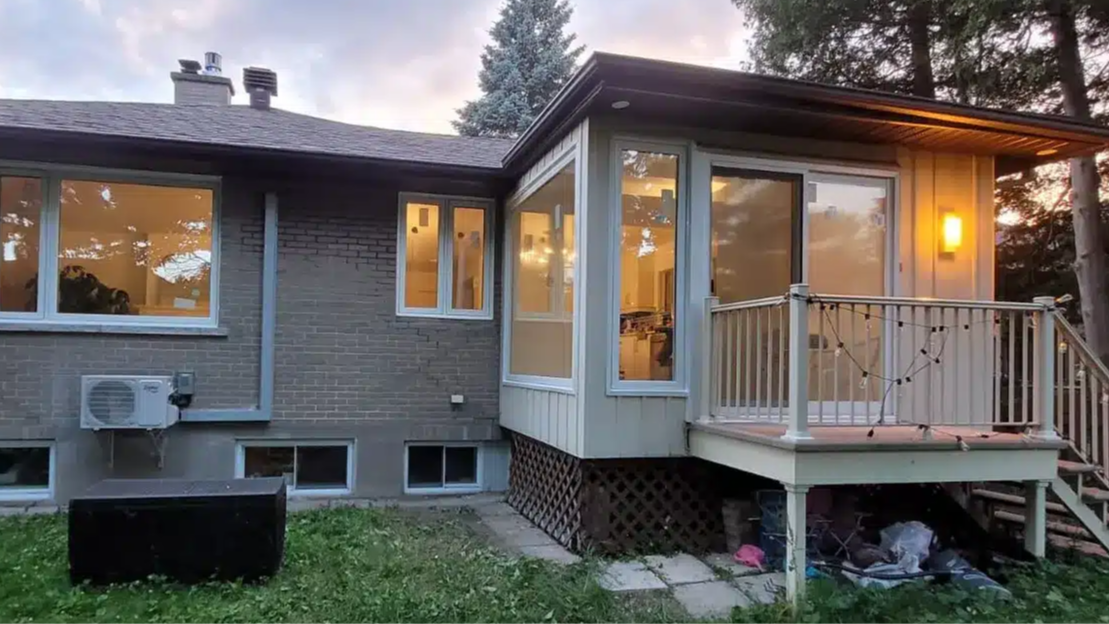
Factory-Direct Windows: What Actually Changes for Canadian Homeowners
When I am on site talking through window replacement, the first question is usually not about Low-E glass, spacers, or air leakage ratings. It is much simpler: “Why is this quote so expensive?”
That is where factory-direct windows can make sense for Canadian homeowners. The idea is not magic. You are just reducing the number of sales layers between the manufacturer, the installer, and the homeowner. Sometimes that creates better pricing. Sometimes it also makes communication clearer.
But factory-direct does not automatically mean the cheapest project, and it does not remove the need for proper installation. That part still matters more than most people want to admit, because apparently windows do not install themselves out of respect for the budget.
Why Factory-Direct Works Differently
In a traditional window sales model, products often move through a dealer, retailer, or sales company before they reach the homeowner. Each layer has its own costs, margins, and process. That does not mean the model is bad, but it can make the final price harder to understand.
Factory-direct windows work differently because the product and ordering process stay closer to the source. In many cases, that means fewer handoffs, faster answers about sizes or options, and pricing that is easier to follow.
What I like about the model is not just the lower cost. It is the reduced confusion.
When a homeowner is comparing window quotes, they often think they are comparing the same product. In reality, one quote may include different glass, different installation scope, different capping, different warranty terms, or a different frame type. Factory-direct can make those details easier to see, but only if the quote is written clearly.
Quality Still Comes Down to the Actual Window
One homeowner misconception I hear often is that factory-direct means “budget grade.” That is not usually how it works.
A lower price can come from the sales model, not necessarily from weaker materials. What I still want to see are proper performance ratings and clear product documentation. For Canadian homes, that usually means checking things like:
- U-factor and air leakage ratings
- Low-E coatings and gas fills where appropriate
- ENERGY STAR certification
- Written warranty terms, including what is covered and what is not
- Whether the window is suitable for the opening and climate conditions
For homeowners comparing performance claims, I would use NRCan’s ENERGY STAR technical specification for windows, doors, and skylights as a useful reference point. It gives better context than just trusting whatever number looks impressive on a brochure.
Rebates are another area where people get tripped up. ENERGY STAR certification can help with eligibility where active programs apply, but rebate rules change and often require steps before the work begins. I always tell homeowners to check the program requirements before ordering, not after the windows are already installed.
What I Check Before Recommending Anything
A good window is only part of the job. Before I care too much about the glass package, I want to understand the opening.
On site, I usually look at the condition of the existing frame, signs of rot or water staining, whether the old unit was properly sealed, and whether the wall around the opening is part of the problem. Some homes have draft complaints that come from failed glass. Others have air leakage around the frame. Those are not the same repair.
This is where installation quality varies a lot.
A strong product can still underperform if the opening is measured poorly, the insulation around the frame is rushed, or the exterior sealing is not done properly. The opposite is also true: replacing a window when the main problem is surrounding wall leakage can leave the homeowner disappointed, because the expensive new glass was not the actual issue.
If you are already comparing planning a window replacement, this is the point where the conversation should move beyond product price. The better question is: what exactly is being replaced, and how will the opening be finished?
When Factory-Direct Makes the Most Sense
Factory-direct windows usually make the most sense when the project is large enough for the savings to matter. Replacing one small window may not change the budget much. Replacing several openings across the house can be a different story.
It can be a practical option when:
- You want ENERGY STAR certified efficiency without extra sales layers
- You are replacing multiple windows and need the numbers to stay realistic
- You are comparing double-pane and triple-pane options
- You want clearer communication about sizing, production, and installation
- You care about the total installed result, not just the product label
That last point matters. I have seen homeowners focus so hard on getting the “best” glass package that they ignore installation details. Then they wonder why the room still feels cold. The window was good. The planning was not.
A Quick Field Example
I worked with a homeowner who had received a high quote for a full house of ENERGY STAR double-pane windows through a dealer model. Their main complaint was winter comfort near the glass, especially in rooms where people sat close to the windows.
After comparing factory-direct options, triple-pane became realistic within the same general budget range. It was not the right answer just because it sounded better. It made sense because the home had several large openings, the comfort issue was real, and the homeowner planned to stay in the house long enough to care about the upgrade.
The important part was still the installation plan. We checked the existing frames, confirmed the scope, and made sure the quote did not hide finishing work that would appear later as an “extra.” That is where many homeowners get surprised.
Timing, Budget, and Not Overspending
Factory-direct does not remove normal renovation planning. Custom sizes still take time. Busy seasons still fill up. Specialty glass packages can affect scheduling. If rebate paperwork is involved, that can slow the decision down too.
The biggest caution I give homeowners is not to upgrade every opening just because the factory-direct price makes it feel possible.
Triple-pane windows can be a strong choice in many Canadian homes, especially where winter comfort is a real issue. But not every window needs the highest-spec package. A smaller opening in a less-used room may not justify the same upgrade as a large living room window where people feel the cold every evening.
Spend where the improvement will actually be noticed.
Closing Thought
Factory-direct windows can be a practical way to reduce unnecessary cost layers and make a larger replacement project more realistic. The value is not only in the price. It is in clearer product information, cleaner communication, and a better match between what the homeowner needs and what gets installed.
From what I see on site, the best results come from pairing a properly rated window with careful installation. Get both right, and factory-direct can be a smart path for Canadian homeowners.
Q&A
Are factory-direct windows lower quality?
Not usually. The quality depends on the actual window, not only the sales model. I would check ENERGY STAR certification, performance ratings, frame construction, glass package, and warranty terms before judging.
Do factory-direct windows qualify for rebates?
They can, if the units meet the program requirements and the homeowner follows the required steps. Many programs require paperwork or evaluation before installation, so this should be checked early.
Is triple-pane worth it in Canadian homes?
It depends on the home and the opening. Triple-pane usually helps most where winter comfort, large glass areas, or long-term efficiency matter. It is useful, but it is not automatically necessary for every window.
Do I still need a professional installer?
Yes. The source of the window does not replace proper measuring, sealing, insulation, and finishing. Even a good factory-direct window can underperform if the installation is rushed or poorly matched to the opening.