Custom Shaped Windows: Style Without Losing Performance
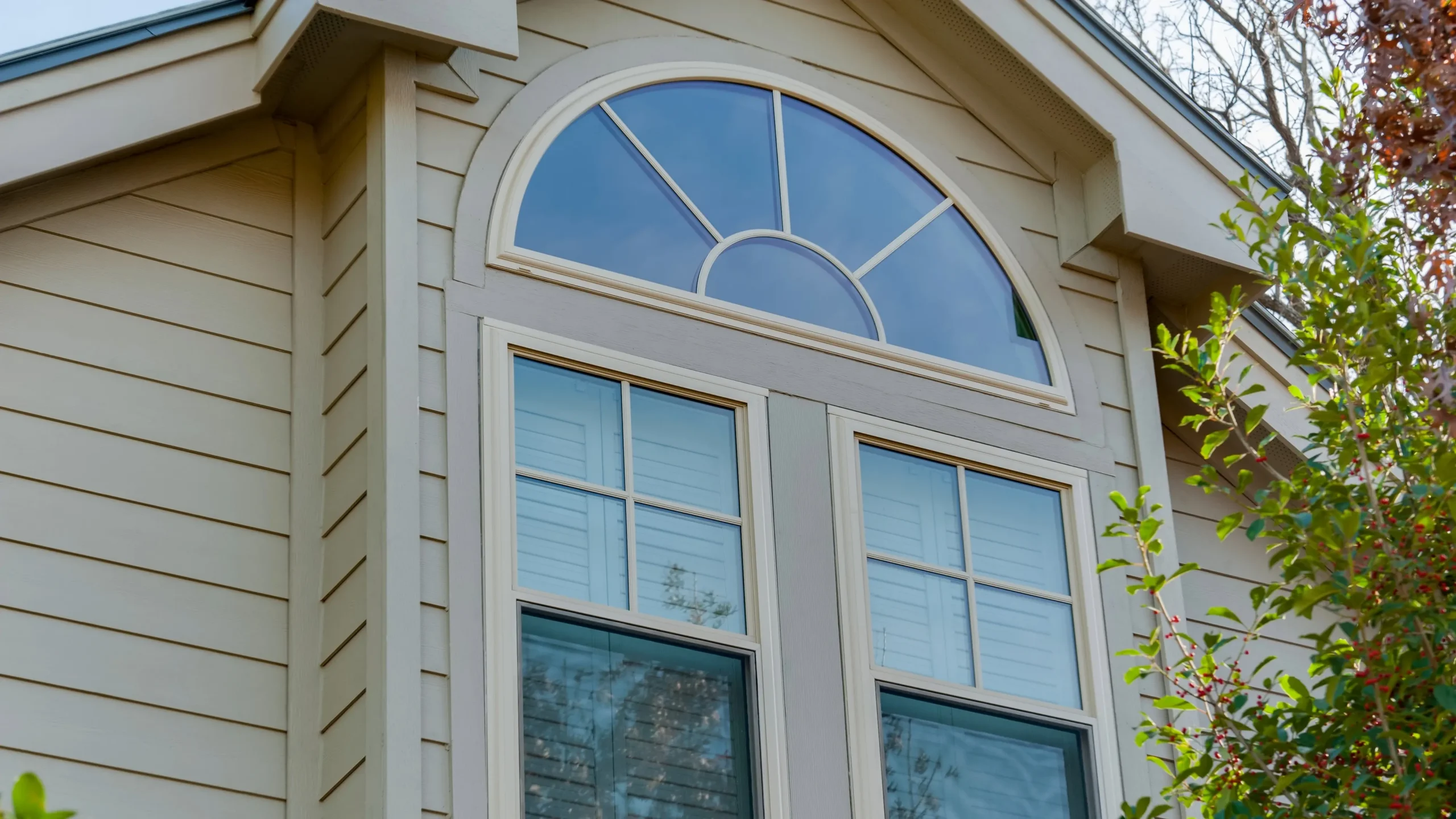
I get asked about custom shaped windows more often than most people expect. Usually it comes from a homeowner with an attic window that has an arch, a gable end with a round opening, or a stairwell where a standard rectangle would look completely wrong.
The question is almost always the same: do I have to replace it with a rectangle, or can I keep the original look?
In most cases, you can keep the shape. The important part is making sure the new unit is measured, built, and installed properly so the window still performs well in a Canadian home.
When Custom Shapes Make Sense
Custom shaped windows usually serve two purposes.
The first is preserving character in older homes. I often see arched, circular, diamond, or angled openings that were clearly part of the original design. Replacing them with plain rectangular units can make the wall look unfinished or patched together.
The second is adding light or architectural detail in newer homes. A triangular window above a vaulted ceiling, an oval in a stairwell, or a curved accent near a roofline can make sense when the shape fits the room.
Most of these windows are fixed, and that is usually fine. Specialty shapes are often used for daylight and appearance, not ventilation. If a homeowner needs airflow, I usually suggest pairing the shaped unit with a standard casement, awning, or slider nearby instead of trying to force an operable design into a difficult shape.
Climate and Performance Considerations
Custom shapes face the same Canadian weather as standard windows. Winter cold, summer heat, wind, and freeze-thaw movement all put stress on the frame, glass edge, and seal.
The shape adds another layer of complexity. Circles, triangles, arches, and ovals can have more edge area compared with the amount of glass. That does not mean they are a bad choice. It just means the frame, glass package, and installation need to be taken seriously.
A common homeowner misconception is that custom shaped windows are mostly decorative and cannot be energy efficient. That is not always true. A well-built custom unit can perform well when the glass, spacer, frame, and installation are all handled properly.
If energy performance is a priority, it is worth checking how the unit is rated rather than assuming it performs the same as a standard rectangular window from the same product line. Natural Resources Canada’s ENERGY STAR Most Efficient criteria for windows and sliding glass doors is a useful reference for understanding how higher-performing windows are evaluated.
What I Look For Before Ordering
Custom shapes leave less room for casual measuring. With a standard rectangular window, there is already enough that can go wrong. With an arch or triangle, a small measurement mistake can turn into gaps, stress on the frame, or a unit that looks slightly off once installed.
On site, I usually check:
- Whether the rough opening is square, stable, and properly supported
- Whether the existing frame failed because of age, water, movement, or poor installation
- How the shaped unit will be insulated and sealed around the full perimeter
- Whether the homeowner actually needs an operable window or just light and appearance
Installation quality varies, and it matters even more with custom work. A good custom window can underperform if the opening is not prepared properly or if the installer treats it like a regular stock replacement.
If you are comparing shape, material, and efficiency together, AlphaTech’s window replacement options can help you understand what makes sense before ordering a custom unit.
Materials and Shape Options
Not every material supports every shape equally.
Vinyl is often the practical starting point. It works well for many common custom shapes such as arches, rounds, triangles, and other basic geometric designs. It is usually lower maintenance and more affordable than wood, but very unusual shapes may not be available from every manufacturer.
Wood gives the most traditional look and can be a good fit when the home’s character calls for it. The trade-off is cost and maintenance. I would not suggest wood just because it sounds more “authentic” if a simpler material can do the job properly.
Fiberglass can be a strong option for larger or more complex shapes because it is stable and handles heavier glass packages well. It usually costs more than vinyl, so it makes sense only when the size, shape, or performance needs justify it.
Aluminum or hybrid options can work for certain modern designs, but availability depends heavily on the manufacturer. This is where homeowners can overspend quickly. A complicated shape, expensive frame material, and upgraded glass package are not always necessary just to solve a simple replacement problem.
A Quick Field Example
I worked on a home with an arched attic window that had failed seals. The owners wanted to preserve the arch, but they were worried the custom replacement would be too expensive or less efficient than a standard window.
After checking the opening, we ordered a custom vinyl arched unit with an upgraded glass package, built to the actual field measurements. It kept the original character of the room without forcing the owners into a more expensive wood unit they did not really need.
The main lesson was simple: the shape was not the problem. The old failed unit, aging seal, and measurement requirements were the real issues.
Cost and Timing
Custom shaped windows usually cost more than standard rectangular windows. Basic geometric shapes in vinyl often carry a moderate premium. Larger units, unusual designs, wood frames, heavier glass packages, and difficult access can push the cost higher.
Lead times are also longer because these units are built to order. Several weeks is normal, and busy seasons can stretch that further. If the window is part of a larger renovation, plan the measuring and ordering early so the custom unit does not hold up the rest of the work.
The smartest decision is not always the most expensive one. In many homes, a simple fixed custom shape with a good glass package and careful installation is the better long-term choice.
Closing Thought
Custom shaped windows can keep a home’s character without giving up more performance than necessary. The key is not just choosing an interesting shape. It is choosing the right material, confirming the performance details, and making sure the unit is measured and installed with care.
When those parts line up, the window looks like it belongs there and performs like it should.
Q&A
Do custom shaped windows reduce energy efficiency?
Not automatically. A custom unit can perform well when it uses a good frame, proper glass package, and careful installation. The important thing is to confirm the actual performance rating for the unit being ordered.
Are all custom shaped windows operable?
No. Most specialty shapes are fixed. They are usually meant for light and architectural detail. If ventilation matters, it is often better to place a standard operable window nearby.
Can I get custom shaped windows in vinyl?
Usually, yes, for common shapes like arches, rounds, triangles, and other basic geometric designs. More unusual shapes may require another material or a different manufacturer.
How long does custom manufacturing take?
It usually takes longer than stock windows because the unit is built to order. Several weeks is common, and timing depends on the shape, material, glass package, and installation schedule.