
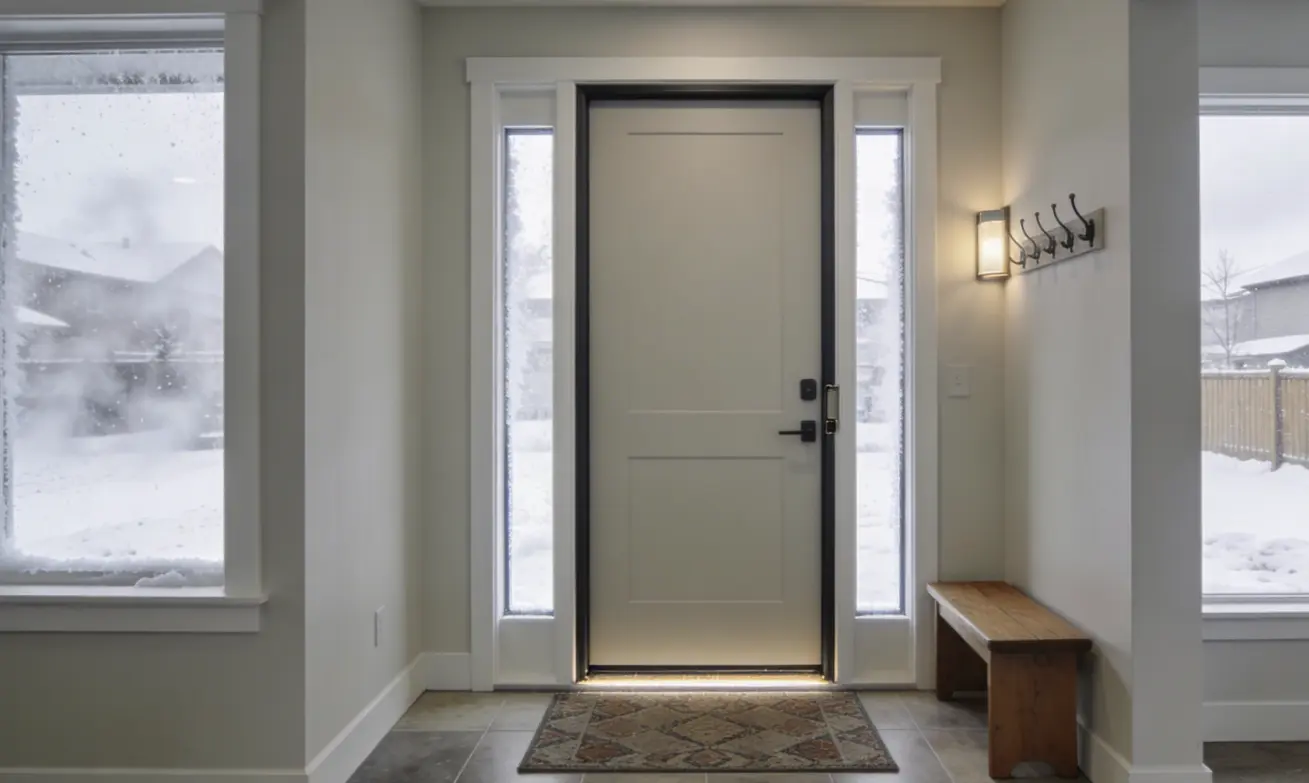
Why Your Front Door Feels Like a Freezer: Cold-Climate Door Drafts Explained
By Alex, Senior Installation Project Manager, AlphaTech Windows and Doors
Picture stepping into a typical Calgary entryway right after a fresh blizzard rolls through: the ceramic tiles feel like ice blocks under your socks even with furnace blasting, a relentless cold stream blasting upward from the door bottom threshold like someone left an AC vent cracked open, guests immediately rubbing their arms and commenting on the sharp chill blast hitting them every single time the door swings shut behind them. I’ve diagnosed and fixed hundreds of these “freezer foyer” setups across Alberta homes – from compact Calgary condos in Kensington to sprawling bungalows in Bowness – and folks notice it hits hardest after the first deep -30 freeze when temporary warmth tricks fade. Reddit’s r/HomeImprovement “drafty front door” posts and r/Calgary apartment/house complaint threads echo the exact same frustration from other cold-climate setups, with homeowners describing the same floor-line chill year after year.
Symptoms Calgary Folks Notice First
You spot light shining visibly under the door sweep or sneaking along the latch-side jamb when it’s dark outside, cold air pouring in steady from the bottom threshold gap and hinge side like a mini wind tunnel, frost buildup slowly creeping onto the interior frame edges or even full ice damming right at the exterior sill pan during thaws, and a big 10-15 degree Fahrenheit temp drop concentrated right inside the entry zone compared to the adjacent hallway or living area. Newer builds in areas like Mahogany, Auburn Bay, or Tuscany often warp fast from factory-installed shims settling uneven under clay soil shifts; older solid slabs in Brentwood or Varsity sag over time on rusted-out hinges from constant open-close cycles. It’s rarely subtle – you feel it with the back of your hand held an inch away, and it shows up clear on your natural gas bill spikes come January.
DIY Tries That Sometimes Stick Around Long-Term
Basic weatherstripping kits from Home Depot or Rona seal jamb and header gaps decently if the frame’s reasonably square (but plan to swap ’em yearly as they compress flat), adjustable aluminum thresholds like M-D Building Products kits stop most bottom leaks without a full tear-out demo, heavy-duty vinyl or brush door sweeps block drafts while keeping out pests and debris both, temporary fabric draft stoppers or even rolled towels buy you time till warmer weather for bigger work, and heavy insulated thermal curtains hung directly over the door cut down radiant cold transfer overnight into the entry. Folks back these with solid success stories: caulking all exterior frame edges with paintable acrylic and injecting low-expansion foam (careful, not full cans that bow things) around the interior perimeter if gaps peek behind trim. These handle 60% of mild-to-moderate cases if you’re handy, patient, and test on windy -20 nights.
When DIY Hits Its Absolute Limit
It all stops working reliably when the door slab itself starts warping from trapped moisture cycles (super common in cheap hollow-core steel doors), the rough frame goes chronically out-of-square more than 1/4 inch from years of house settling, or the unit was badly installed from day one in newer builds with no proper sill pan flashing or jamb extensions to begin with. Warped slabs bind tight on the top hinges forcing air gaps below, out-of-square frames prevent even compression against weatherstripping no matter what you stuff in, and missing pans let every melt-freeze cycle wick water up into rot that spreads fast. At that stage, the draft feel turns chronic and worsening – DIY patches peel or fail every season, leaving you frustrated.
Pro Fixes and When to Replace Fully
Reddit threads overwhelmingly push calling a pro installer early for precise hinge rehangs and mortising (often regains that critical 1/8 inch clearance for smooth close), shim adjustments under the jamb legs to square everything up tight, blown-in perimeter insulation injected behind the trim casing for thermal break, or complete sill pan retrofits with self-adhering flashing membranes. Clear signs you need full door replacement: rot penetrating past 2 inches into jambs, slab bowing over 1/4 inch across width when measured flat, or three-plus failed seal attempts showing condensation inside glass lites. New insulated fiberglass or foamed-steel doors with polyurethane cores cut air infiltration by 40-50% tested, but always pair them with custom threshold/sweep tweaks and perimeter foam for the win. NRCan’s door retrofits page spells out $125 grants per qualifying ENERGY STAR opening, plus bonuses for multi-pane sidelites after pre/post audits.
One Calgary condo owner in Kensington went through three rounds of DIY weatherstrip kits one brutal winter – seemed patched okay till the next hard freeze, when the underlying warped frame still let cold pour relentlessly down the latch side no matter what. A quick pro realignment, hinge plane, and threshold swap fixed it without replacement for under $600; meanwhile, a nearby Bowness house family needed a full new fiberglass entry swap – their 20-year warped oak slab let -35 air infiltrate nonstop around every edge. Both entries are cozy tight now, rebate-covered where eligible, and delivered real noticeable bill drops without overspending.
Pro Tips Before Jumping to Full Replacement
Always start with pro adjustments and resealing – runs $300-800 vs. $3k-6k for a new door system, and tests post-fix with incense sticks on a gusty night confirm success. New insulated models slash total entry heat losses by 40% reliably, with savings stacking bigger if you bundle patio doors too. But skip full replace if the frame and slab core are solid structurally – it’s overkill in sheltered exposures or mild homes, and resale buyers care more about function than labels.
Need a quick door draft check or no-pressure quote? Hit up AlphaTech’s quote page.
Q&A from Threads
Weatherstripping alone fix this?
Often yes for simple jamb gaps if frame’s square; test on windy -20 days, replace yearly in our freeze-thaw.
New insulated door mean big bill savings?
Yes, 15-25% off entry-zone losses vanish; most noticeable if old one’s thin steel or single-pane glass.
Do new doors qualify for rebates easy?
$125 per ENERGY STAR opening standard – extra for triple-pane sidelites; full audit pre/post required though.
Safe to DIY foam around door frame?
Low-expansion type only, trim excess quick; big cans bow jambs out. Pros use precise meter guns always.