
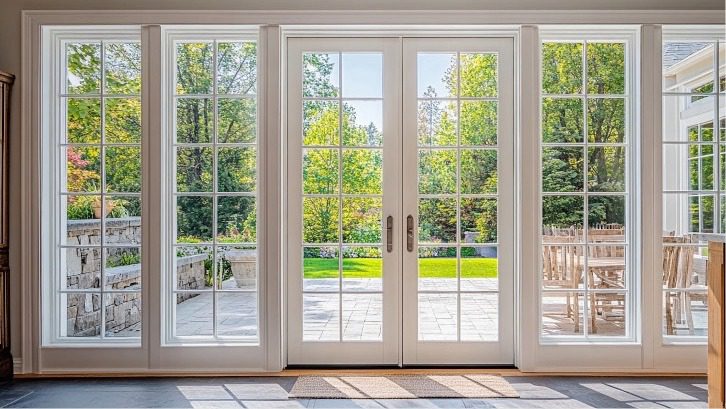
Entrance and French Door Replacement
I often get called in the middle of winter when someone says, “I can feel cold air right through the door.” It is usually subtle at first, but once temperatures drop, it becomes hard to ignore.
That is when entrance and French door replacement starts coming up. In many cases, the issue has been developing slowly over time.
Why Doors Struggle in Canadian Conditions
Doors deal with constant expansion and contraction in our climate. Between cold winters and warmer seasons, materials shift more than people expect.
With entry doors, I often see worn weatherstripping or slight frame movement creating air gaps. Older wood doors can warp, and early steel doors usually lack proper insulation.
French doors introduce more variables. The meeting point between the two panels is often where problems show up first. Even small alignment issues can lead to drafts, leaks, or locking problems.
Wind-driven rain and snow also put pressure on the threshold. If sealing was not done properly during installation, moisture can work its way in over time.
What to Think About Before Replacing
Before replacing a door, I usually try to determine whether the issue is the door itself or the installation around it.
A few things I go over with homeowners:
- Material choice affects durability and stability
Steel is reliable and cost-effective. Fiberglass tends to resist warping better over time. - Glass impacts energy performance
More glass usually means more heat loss unless the glazing is high quality. - Hardware plays a bigger role than expected
Lower-quality hinges and locks wear out faster, especially on heavier doors. - Installation quality matters just as much as the product
Even a good door will underperform if sealing and alignment are off.
If you are comparing options, it helps to review the ENERGY STAR technical specifications for doors in Canada to understand how insulation and air leakage are measured.
What I Look for on Site
When I inspect a door, I start with how it operates. If it sticks or does not latch properly, that usually points to alignment or structural movement.
Then I check the frame and threshold for gaps, worn seals, or signs of moisture.
With French doors, I pay close attention to the meeting stile and locking system. If the multi-point lock is not engaging properly, both sealing and security are affected.
One common misconception is that drafts come through the door panel. In many homes, the real issue is around the frame.
Installation quality varies more than most people think. I have seen new doors perform poorly due to rushed installs, and older ones perform well because they were installed carefully.
If you are evaluating options, it helps to review entrance and French door replacement solutions and installation considerations so you are looking at the full picture.
A Quick Real-World Example
I was at a home where the front door had been replaced not long ago, but the homeowner still felt cold air every winter.
They assumed the door itself was defective.
After checking it, I found a small uninsulated gap along the frame. Cold air was moving through the wall and showing up around the trim.
We sealed and insulated the area, adjusted the door, and the draft disappeared.
They did not need a new door after all.
Timing, Cost, and Expectations
Entry doors are usually more straightforward and cost less than French door systems. French doors often require more structural consideration and careful installation.
Most work is done in milder seasons, but year-round installation is possible.
I always caution against overspending on upgrades that may not deliver noticeable benefits. Decorative glass, triple glazing, and premium finishes add cost quickly. In many cases, proper sealing and installation provide the biggest improvement.
If your current door is already fairly modern, energy savings from replacement may be limited.
Closing Thoughts
Entrance and French doors affect comfort more than most people expect. When something is off, you feel it right away.
In most cases, the issue comes down to installation quality, aging components, or shifting over time rather than the door design itself.
Getting the basics right usually matters more than choosing the most expensive option.
Q&A
Why is my front door drafty in winter?
Drafts usually come from worn seals, small frame gaps, or slight shifting that affects how tightly the door closes.
Are French doors less energy efficient?
They can lose more heat due to glass area, but modern glazing and proper sealing significantly improve their performance.
Why does my door stick or not close properly?
Seasonal expansion, frame movement, or worn hinges can affect alignment and prevent the door from closing smoothly.
Are French doors secure enough?
They are secure when equipped with a proper multi-point locking system and installed with correct alignment and reinforcement.