
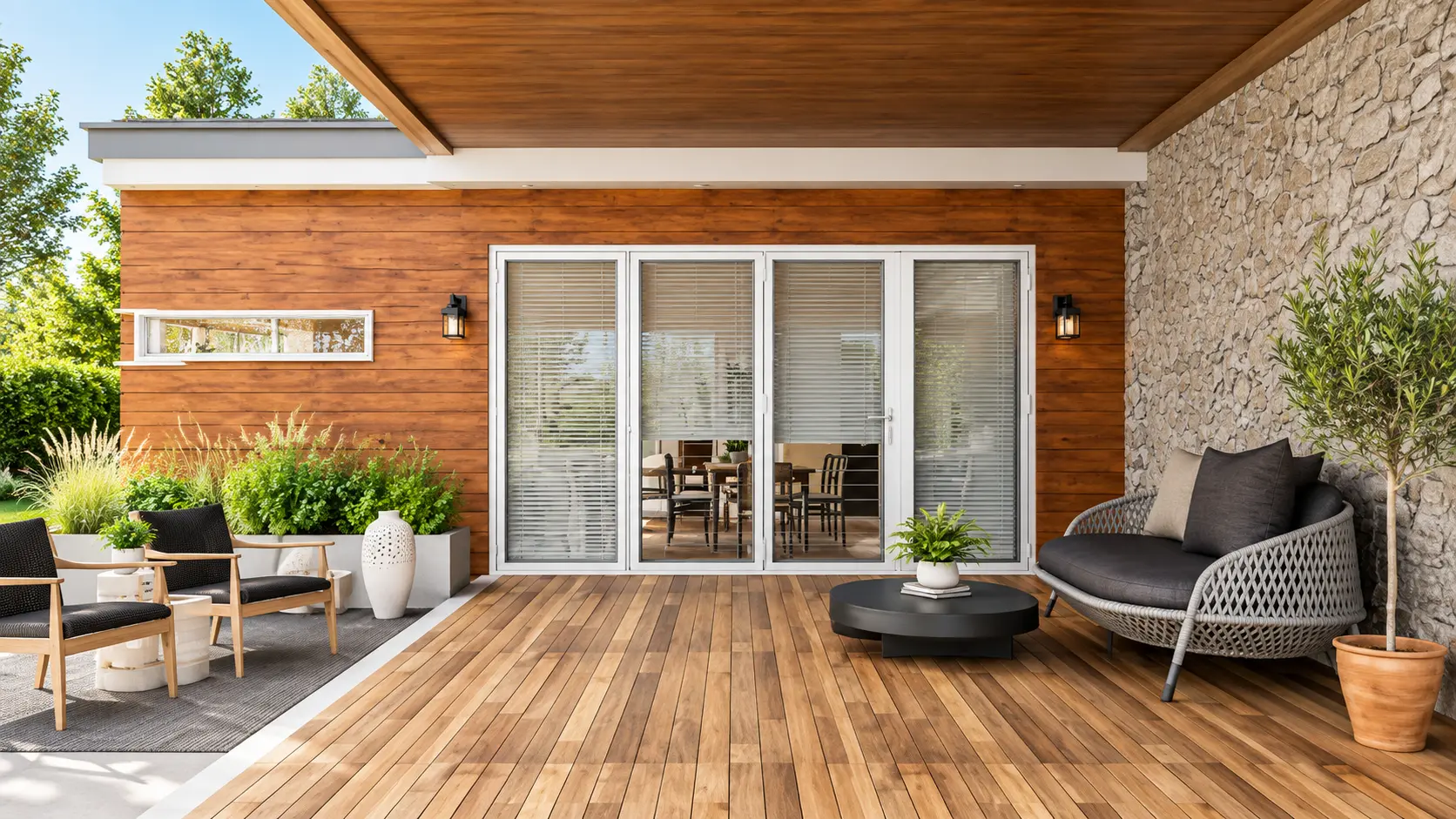
When homeowners start planning a patio door replacement, one of the first questions I hear is surprisingly basic: how many panels should the new door have?
It sounds like a design choice, but patio door configurations affect much more than appearance. A 2-panel, 3-panel, or 4-panel system changes the amount of glass, usable opening width, traffic flow, hardware, installation requirements, and usually the project cost.
I often tell homeowners not to begin with the biggest door they can fit. Start with how you actually use the opening.
What the Number of Panels Really Changes
A standard 2-panel sliding patio door usually has one operating panel and one fixed panel. It is simple, familiar, and works well when the existing opening already suits the household.
A 3-panel door gives designers more flexibility. Depending on the product, one section may operate while two remain fixed, or the operating arrangement may be configured differently.
With a 4-panel patio door, homeowners are usually trying to create a much wider visual connection between the house and the outdoors. Some configurations allow the centre panels to open, while others use a different active-and-fixed arrangement.
The important point is this: total door width and usable opening width are not the same thing.
A very wide patio door can contain a lot of glass while still providing a relatively modest passage when open. Before ordering anything, I want to know how much clear opening the homeowner actually needs.
Start With How You Use the Door
When I look at a patio opening, I ask practical questions.
Do people regularly carry food outside? Is this the main route to a deck or backyard? Will large furniture ever need to pass through the opening? Is the homeowner mainly trying to improve the view and daylight?
A 4-panel system can look impressive, but there is no reason to pay for that much door if a 2-panel system already provides enough access.
On the other hand, keeping a narrow 2-panel layout just because that is what the house currently has can also be limiting.
AlphaTech offers several 2-, 3-, and 4-panel patio door options, so the useful comparison is not simply “small versus large.” It is how the configuration works in the actual opening.
Bigger Patio Doors Need Better Planning
The wider the door assembly, the more important accurate measuring and installation become.
Before replacing a large patio door, I look at the rough opening, the header above it, the sill support, the floor height, exterior finishes, and whether the opening is level and square.
Older homes do not always give us perfectly straight openings. Over a wide span, a small variation can become significant.
Sliding panels need to travel smoothly and meet their seals correctly. If a large frame is installed slightly twisted, homeowners may notice it through difficult operation, uneven locking pressure, or air leakage.
That is why I am cautious when someone focuses entirely on glass specifications but treats installation as an afterthought.
More Glass Does Not Automatically Mean a Cold Room
Another common concern is whether a 3- or 4-panel patio door will make the room colder.
More glass does increase the amount of glazed exterior surface, so it is a reasonable question. But panel count alone does not determine performance.
The glass package, frame construction, weatherstripping, interlocks, threshold design, and installation all matter.
Natural Resources Canada’s ENERGY STAR Most Efficient criteria for windows and sliding glass doors are a more useful reference than simply assuming fewer panels always mean better efficiency.
In many homes, replacing a poorly sealed older patio door with a properly installed modern system makes a much bigger comfort difference than choosing between two modern configurations with similar performance specifications.
A Patio Door Project I Often See
One homeowner I worked with wanted to replace an older 2-panel slider with the widest 4-panel door the wall could reasonably accommodate.
Once we talked through the project, the reason became clear. They did not actually need a larger opening for traffic. They wanted more daylight.
A 3-panel configuration gave them the wider glass area they wanted without expanding the project as much as the original plan would have required.
That is the kind of decision I like. Spend money where it changes how the home is used, not simply because another panel can technically fit.
Think About the Door Type Too
Sometimes the panel-count discussion reveals a different question entirely.
A homeowner may be comparing 3- and 4-panel sliders when what they really want is a wide opening with two swinging leaves.
In that situation, it makes sense to compare sliding patio doors vs French doors before getting too deep into panel layouts.
Sliding doors generally preserve interior and exterior floor space because the panels move within the frame. Hinged doors create a different opening experience but require clear swing space.
Neither is automatically better.
Budget for the Whole Installation
Larger patio doors generally mean more glass, more frame material, heavier panels, and sometimes more complex installation.
If the existing opening must be enlarged, the project can also involve structural work and additional interior or exterior finishing.
That is why two quotes for “a patio door” can look very different.
Before comparing prices, make sure both contractors are quoting the same panel arrangement, overall dimensions, glass package, installation method, finishing work, screens, and hardware.
The cheapest unit can become expensive quickly if half the project was simply left outside the quote.
Closing Thought
Choosing between patio door configurations should start with function.
I look at how wide the opening really needs to be, how the family uses it, how much glass they want, and what the existing wall allows us to install properly.
Sometimes the simple 2-panel door is exactly right. Sometimes opening the room visually with three or four panels is worth the additional scope.
The goal is not to install the most door possible. It is to install the configuration that makes sense for the house.
Q&A
Is a 3-panel patio door better than a 2-panel door?
Not automatically. A 3-panel system can provide more glass and configuration flexibility, but a 2-panel system may already provide all the usable opening you need.
Do all four panels open on a 4-panel patio door?
Usually not. Operating arrangements vary by system. Some use active centre panels while other panels remain fixed, so confirm the exact configuration before ordering.
Does a larger patio door lose more heat?
A larger glazed area can increase overall heat transfer, but glass performance, frame construction, sealing, and installation have a major effect on the final result.
Can I replace a 2-panel door with a 4-panel door?
Sometimes, but it depends on the available wall opening. If the opening must be widened, structural and finishing work can substantially change the project.