
Sliding Patio Doors vs French Doors: Which Should You Choose?
I often meet homeowners who have already decided which door looks better, but have not considered how it will operate beside furniture, steps, railings or a shallow deck. Those practical details usually matter more after installation than the style seen in a catalogue.
When comparing sliding patio doors vs French doors, neither design is automatically better. The right choice depends on available space, required opening width, everyday traffic, exposure and the condition of the existing opening.
Operating Space and Usable Opening Width
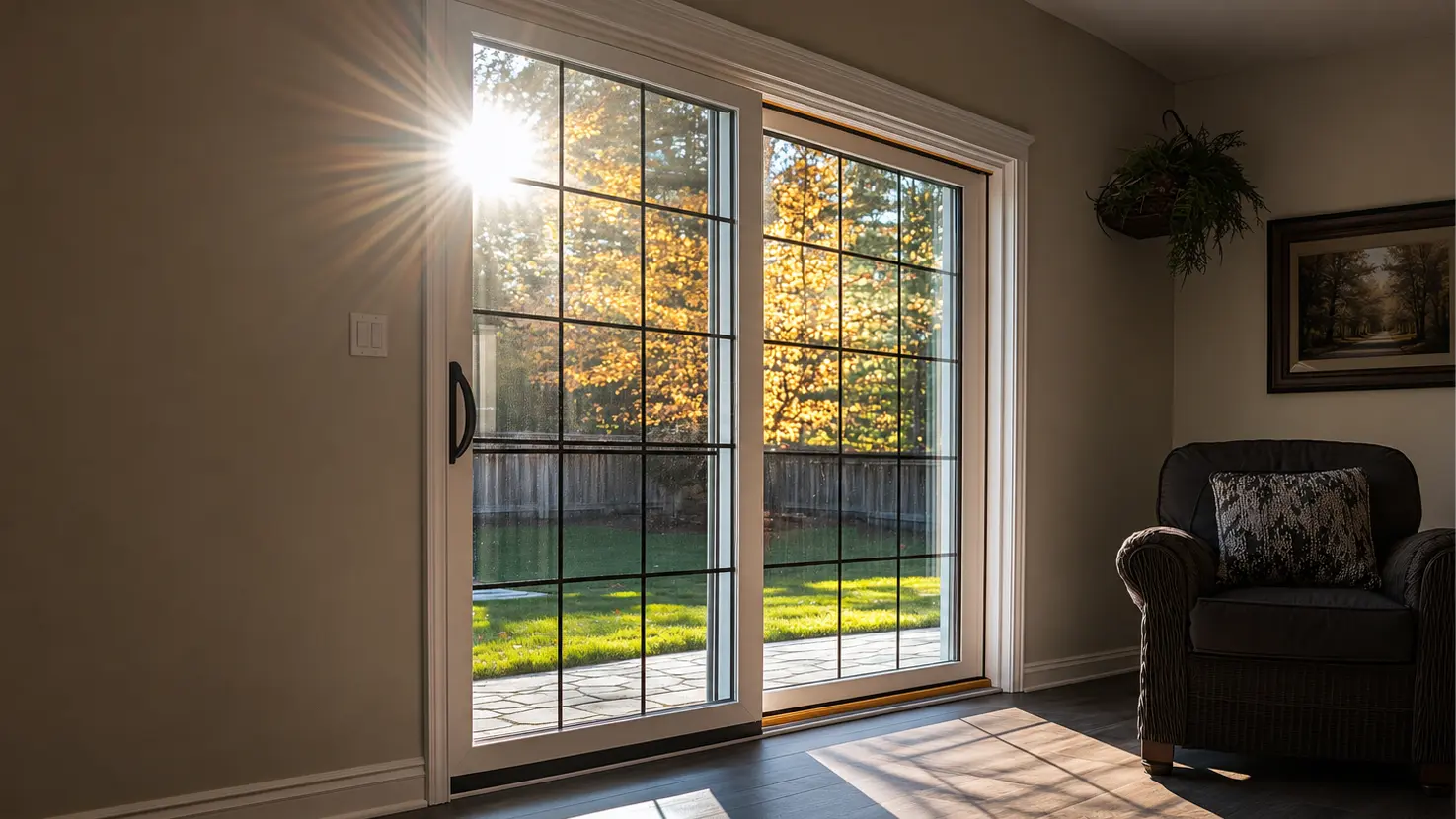
A sliding patio door operates within its own frame. It does not need clearance inside the room or outside on the deck. This is useful where furniture sits near the doorway or exterior space is limited.
The trade-off is opening width. With a typical two-panel slider, only part of the total unit opens. Other panel configurations may provide different opening arrangements, but the active passage is still determined by how the panels move.
French doors require clear swing space. Depending on the product and installation, they may swing inward or outward. When both leaves are operable, they can provide a wide temporary opening for moving furniture or accommodating heavier traffic. However, homeowners should confirm that both leaves actually operate in the selected system.
Snow, roof runoff, railings, steps and nearby furniture can all interfere with a swinging door. These details need to be evaluated before the operating direction is selected.
Accessibility and Everyday Operation
Neither door style is automatically more accessible. I look at the clear opening, threshold height, operating force and how the household will use the doorway.
A properly adjusted sliding door should move without excessive effort, but dirty tracks, worn rollers or poor alignment can make a large panel difficult to operate. French doors avoid the sliding track, although hinges and latching hardware must remain aligned for the active leaf to open and close smoothly.
For strollers, walkers or mobility equipment, the published unit width does not tell the full story. The usable passage and sill profile are more meaningful. Homeowners should compare the actual opening rather than assuming that a wider-looking door will provide easier access.
Ventilation, Screens and Security
Sliding doors are practical when homeowners want controlled ventilation. The active panel can be opened partially, and a sliding screen is commonly integrated into the system. Screen availability and operation still vary by product series.
French doors can provide a broad opening when both leaves are used, but screening the full doorway may require a different configuration. An inward- or outward-swinging screen arrangement also needs enough operating space.
Security depends on the complete product, not simply the door style. Sliding systems may use reinforced locks, interlocking panels and anti-lift features. French doors depend on the active-leaf lock, frame reinforcement and proper engagement of the inactive leaf. Hardware provides limited protection if the frame is poorly supported or the door is out of alignment.
Homeowners reviewing sliding patio door configurations and options should compare panel operation, screens, locks and glass packages together rather than selecting one feature in isolation.
Airtightness Depends on More Than Door Style
A common misconception is that sliding doors are always draftier or that French doors always seal more tightly. In practice, installation quality varies, and both systems rely on several components working together.
Sliding doors use interlocking panels, weatherstripping, rollers and drainage paths. French doors rely more heavily on compression seals, hinges, latches and alignment between the leaves. Either system can perform poorly if it is incorrectly installed or no longer adjusted properly.
NRCan’s window and door buyer guidance explains why glazing, frames, weatherstripping and whole-product efficiency should be considered together. A door’s operating style alone does not establish its energy performance.
What I Check Before Recommending a Door
During an assessment, I check whether the opening is level, square and adequately supported. I also look at drainage, flashing, exterior grading, threshold height and signs of movement or water damage.
If a homeowner wants to change from a slider to French doors, I determine whether the existing opening can accept the new configuration without structural changes. Interior trim, exterior cladding, flooring and the landing may also require work.
Not every difficult door needs replacement. Worn rollers, damaged weatherstripping, dirty tracks, loose hardware or minor alignment problems can sometimes be corrected. Replacement becomes more practical when the frame is deteriorated, the glass seal has failed, the door cannot be secured or the existing configuration no longer serves the household.
A Common Planning Outcome
One homeowner situation I often encounter involves a French-door preference in a room with limited floor space. Once the swing path is marked, it becomes clear that one leaf would interfere with the dining area and the other would conflict with exterior furniture.
In that situation, keeping a sliding configuration preserves the usable space and avoids unnecessary alterations. In a larger opening with clear swing space, the opposite decision may make sense when a wider temporary passage is genuinely useful.
Budget and Replacement Decisions
Replacing a door with the same operating style and similar dimensions is usually less complicated than converting the opening. Structural changes, custom sizing, hidden frame damage and additional finishing work can increase the total.
Avoid paying for a wider opening, elaborate grille package or specialized hardware unless it solves a real need. If the existing door remains secure, dry and reasonably airtight, adjustment or component replacement may be more proportionate than a complete conversion.
Final Thought
The best choice between sliding patio doors and French doors comes from matching the door to the opening and the way the household uses it. At AlphaTech, we consider operation, exposure, access and installation conditions before treating appearance as the deciding factor.
Questions Homeowners Often Ask
Are French doors more energy-efficient than sliding doors?
Not automatically. Compare whole-product ratings, glazing, weatherstripping and air leakage. Installation and adjustment also have a significant effect.
Can a sliding door be replaced with French doors?
Often, but it depends on the opening dimensions, structure, threshold, landing and available swing space. Additional framing or finishing may be required.
Which option is easier to maintain?
Sliding doors need clean tracks, open drainage paths and correctly adjusted rollers. French doors require hinge, latch and frame alignment. Neither is maintenance-free.
Which door provides better ventilation?
Sliding doors make partial opening and conventional screens straightforward. French doors may provide a wider opening, but their screen arrangement can be more complex.