
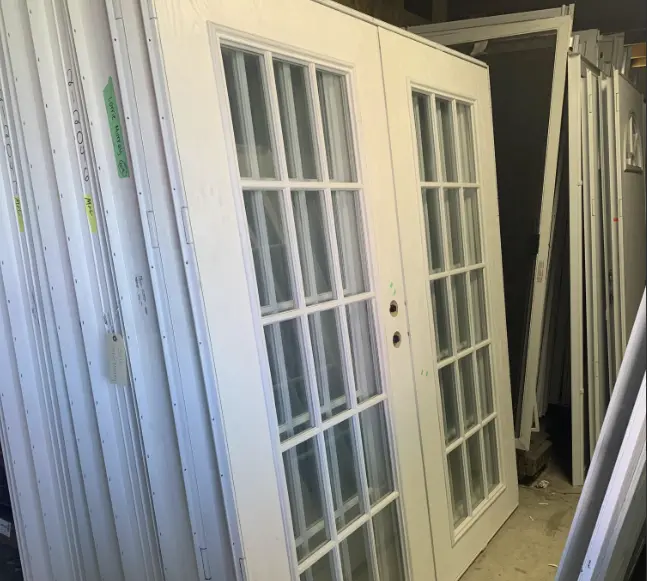
Exterior French Doors: What to Know Before Replacing Your Patio Entry
By Alex, Senior Installation Project Manager, AlphaTech Windows and Doors
I get called out to a lot of homes where the old patio door has simply worn out. The seal at the threshold is gone, the frame is drafty, and in some cases the glass is fogging between the panes. When homeowners start looking at replacements, French doors come up often – and for good reason. But there are a few things worth thinking through before committing, especially in a climate that puts exterior doors through as much stress as Canada’s does.
Why French Doors Work Well Here – When Specified Right
Exterior French doors are hinged, double-leaf units, which means their weather performance depends almost entirely on how well the two doors meet at the centre stile and how the threshold manages snow, ice, and water. In Canadian conditions, those two details are where most problems show up.
A well-built French door system handles this through compression weatherstripping along the meeting stiles, a thermally broken sill, and a threshold with proper slope and drainage. When those elements are in place, a French door can perform very well through a Canadian winter. When they’re not – or when they wear out and aren’t replaced – the centre seam becomes a reliable draft source every time the temperature drops.
Older steel-and-wood French doors or thin-frame units from the 1980s and 1990s were rarely built for the thermal demands Canadian winters actually create. Most of those original units are now underperforming on both air-leakage and insulation, and in many cases the frames have shifted enough that the doors no longer close with consistent pressure across the full perimeter.
Key Specs Homeowners Should Understand
The most common mistake I see is choosing French doors based on appearance alone. The look matters, of course, but the specs underneath the style are what determine how comfortable the room will be in January.
A few things worth comparing before deciding:
- U-factor is your insulation benchmark – lower values mean better resistance to heat loss through the glass and frame. ENERGY STAR-certified door units meet NRCan-verified thresholds for Canadian conditions.
- Air-infiltration rate matters a lot with French doors specifically, because the meeting-stile seal is a known weak point. Ask about this directly.
- Threshold design should include a sloped, weep-drained, and thermally broken sill. A flat or poorly drained threshold is where ice and snowmelt cause the most damage over time.
- Solar heat gain coefficient determines how much warmth the glass lets in – useful on south-facing entries, but worth thinking through on west-facing ones.
- Frame material affects both durability and maintenance. Vinyl is low-maintenance and efficient, fiberglass resists warping and handles temperature swings well, and thermally broken aluminum gives a more contemporary profile with solid strength.
For homeowners who want to verify which French-door units actually meet Canada’s efficiency benchmarks, the NRCan list of ENERGY STAR-certified windows and doors is the most reliable reference – it’s searchable by product type and manufacturer.
The Sliding Door Comparison
One question I hear often is whether French doors are more efficient than sliding patio doors. The honest answer is that it depends on the specific units being compared, but fixed-point hinged doors with multi-point locking systems generally offer better perimeter compression than sliders, which rely on a gliding seal that wears unevenly over time.
French doors also give you full, unobstructed ventilation when both panels are open, and the hardware tends to feel more solid to homeowners who are used to lifting-and-sliding mechanisms. That said, French doors need swing clearance – both inside and outside. On a deck where snow piles up against the exterior, or in a tight interior space, that swing arc can become a real limitation. It’s worth standing in the opening and thinking through where the doors actually land when fully open before deciding.
If you’re weighing a French-door replacement against a sliding-door upgrade for a patio or rear-entry opening, AlphaTech’s exterior door options cover both styles and include guidance on threshold and flashing details that affect long-term weather resistance.
What I Check on Site
When I assess an existing French-door opening, the first thing I check is the threshold condition and the sill framing underneath it. If water has been getting under the door for a while, the structural framing can be compromised in ways that aren’t visible until the door is out. That’s not a reason to avoid the project – it just needs to be addressed before the new unit goes in.
I also check how the existing doors close. If they require force to latch, or if the deadbolt doesn’t slide cleanly into the strike, it usually means the frame has racked or the hinges have shifted. That kind of movement tends to worsen with time, and it tells me the rough opening needs careful assessment before new doors are hung.
One misconception I run into regularly is that French doors are inherently drafty because of the centre seam. That’s not really accurate – a well-installed set of French doors with quality weatherstripping and a multi-point lock that draws both panels tight should be quite airtight. The drafts people associate with French doors usually come from worn gaskets or units that were never properly adjusted after installation.
A Realistic Field Example
A while back I worked on a home where the rear French doors had been problematic since the owners moved in. Cold air came through the centre seam all winter, and the threshold had cracked from repeated ice cycles. The original installer had used a flat sill with no drainage slope, and water had been getting under the door every spring for years.
We removed the old unit, addressed some minor rot at the sill framing, and installed a new fiberglass French door set with a sloped thermally broken threshold and multi-point locking. The homeowners mentioned that winter that the rear of the house felt warmer than it had in years. The fix wasn’t just the door – it was getting the sill and flashing right at the same time.
Cost and Timing
Exterior French doors typically sit in the mid-to-upper cost range, especially with upgraded glazing, multi-point hardware, or custom sizing. They generally cost more than a basic sliding patio door of the same width, partly because of the hardware complexity and partly because the threshold systems are more involved. That cost gap narrows when you compare quality-matched products rather than budget sliders against premium French doors.
Timing is easiest in drier, milder months when caulk and sealant cure properly and the rough opening can be left exposed briefly without risk. That said, Canadian homeowners replace exterior doors year-round when leaks, drafts, or security issues make waiting impractical. Winter installs are manageable with the right preparation – it just requires more attention to keeping the opening protected during the swap.
I’d caution against cutting costs on the threshold or installation quality. A well-specified French door with a builder-grade sill and rushed flashing will underperform a modestly specified door that was installed carefully. The threshold is the most exposed part of the assembly and the most likely to show problems first.
Closing Thought
Exterior French doors are a solid choice for Canadian homes when the right product meets the right installation. The style gets a lot of attention, but what actually carries the performance through long winters is the threshold design, the meeting-stile seal, and the quality of work behind the trim. Get those right and French doors will handle the climate comfortably for decades.
Q&A
Q: Are French doors harder to keep airtight than a single entry door?
They can be if the weatherstripping or multi-point lock isn’t maintained. The centre seam needs periodic inspection. But a quality set of French doors with intact gaskets and proper locking pressure performs very well – the reputation for being drafty usually comes from worn or poorly installed units.
Q: How do I manage snow and ice buildup on the threshold?
A well-designed thermally broken, sloped threshold with weep drainage handles most of it passively. Keeping the threshold clear after heavy snowfall and avoiding ice-melting products that can degrade gaskets are the main maintenance habits worth building.
Q: Will French doors match my existing windows if I replace them?
It depends on the product line. Many manufacturers offer coordinated profiles across their door and window ranges. If consistent sightlines and trim details matter on your elevation, it’s worth confirming compatibility before ordering.
Q: Is triple-pane glass worth the extra cost in French doors?
In exposed locations or colder regions it often is, especially for reducing cold-edge discomfort near the glass in winter. In milder locations or well-sheltered entries, a quality double-pane Low-E unit usually performs well enough that the triple-pane premium may not be necessary.