
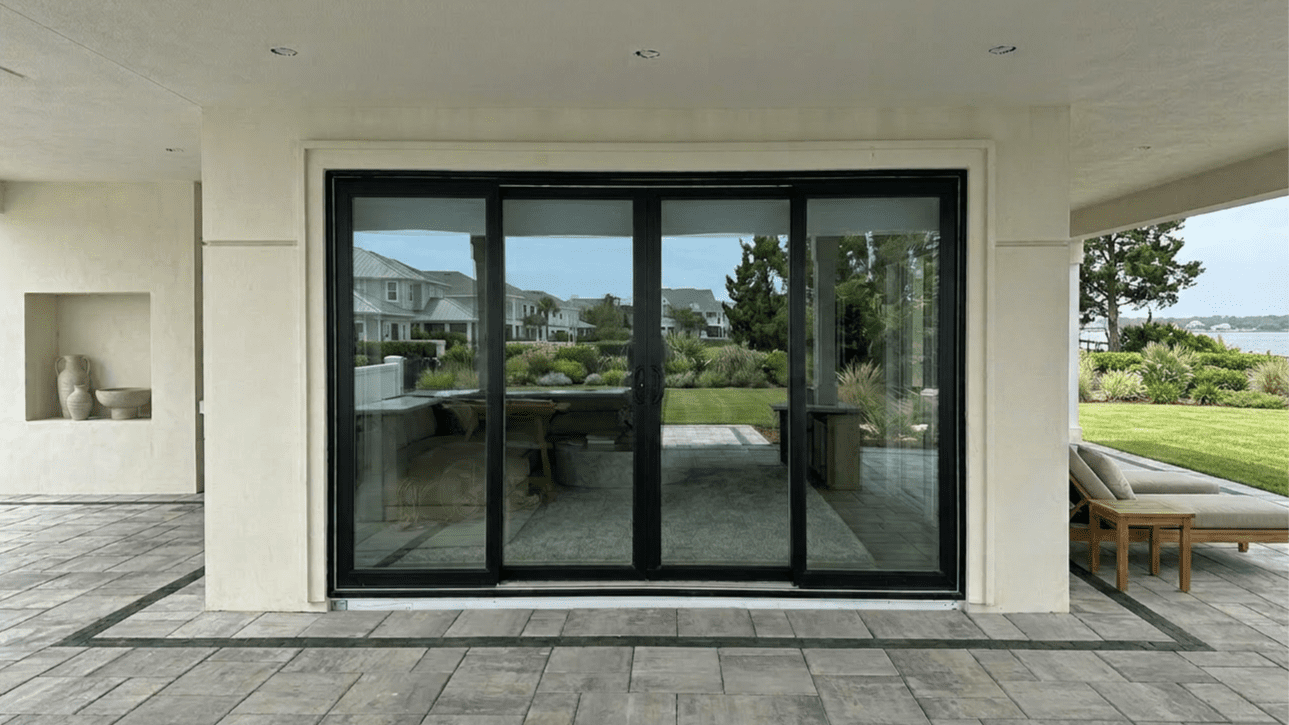
Drafty Patio Door Replacement: Signs the Whole System Is Failing
I often hear from homeowners when winter makes a patio door impossible to ignore. The room feels colder near the glass, the floor beside the door is uncomfortable, or there is a small stream of cold air that seems to appear no matter how much weatherstripping gets added.
That is usually when drafty patio door replacement becomes worth discussing. Not because every cold spot means the door has to go, but because a sliding patio door is a full system. The glass, rollers, track, frame, lock, sill, and weather seals all have to work together. When several of those parts are tired at the same time, small fixes can turn into a frustrating cycle.
Why Patio Doors Feel So Drafty in Winter
A patio door has a lot working against it in cold weather. It has a large glass area, long sealing points, and a moving panel that has to stay aligned year after year. If the panel drops slightly on worn rollers, the lock may still close, but it may not pull the door tight against the weather seal.
That small change can be enough to make the room feel cold.
Canadian winters make these problems easier to notice. Cold outdoor air, wind pressure, snow near the sill, and indoor heating all expose weak seals. Sometimes the glass gets blamed, but the bigger issue is air movement around the panel or frame.
A door can look fine and still perform poorly.
The Problem Is Usually More Than One Part
One common misconception is that every patio door draft is just bad weatherstripping. Weatherstripping matters, but it cannot fix a door that no longer sits square, slides badly, or locks loosely.
When I inspect an older sliding patio door, I look at the whole opening. I check whether the panel moves smoothly, whether the rollers are worn, whether the lock pulls the panel tight, and whether the track is damaged or uneven. I also look at the exterior caulking, the sill, the interior trim, and any signs of water staining or air leakage around the frame.
Fenestration Canada’s technical resources for window and door performance are useful here because patio door performance is not just about glass. It also depends on installation, frame design, air leakage, drainage, and how the unit fits into the wall.
That is where many homeowner fixes fall short. Tape, foam, and temporary seals may reduce the draft for a while, but they do not correct a tired door system.
When Full Replacement Starts Making Sense
Small adjustments can sometimes help for a season. But if the same problems keep coming back, the issue is usually deeper than one part.
Full replacement starts to make more sense when:
- The door is hard to slide and feels like it is dragging.
- The lock closes but does not pull the panel tight.
- The track is worn, bent, or damaged.
- Cold air comes through every winter.
- The frame looks out of square or tired.
- The door has been adjusted more than once and still feels loose.
- There are water stains or signs of poor drainage near the sill.
If the rollers, lock, frame, and seals are all showing age, it may be time to compare patio door replacement options instead of chasing another small winter fix.
The practical question is not “Can one part be changed?” It is “Will changing one part actually solve the comfort problem?”
Installer Perspective: What I Check First
A drafty patio door tells me something is not sealing properly, but it does not tell me exactly where the failure is. That is why I do not start with the glass alone.
I usually open and close the door a few times. The sliding feel says a lot. If the panel grinds, drops, or needs to be lifted to lock, the rollers or track may be worn. Then I check the meeting rail, where the moving panel meets the fixed panel. If that line is uneven, the weather seal may not be making good contact.
The lock is another clue. A lock should not only keep the door closed. It should help pull the panel into the right position. If the lock is loose or barely catches, the door may close but still leak air.
Then I look at the frame and sill. Poor drainage, old caulking, and weak perimeter sealing can make the area feel cold even when the door panels themselves are not the only issue. Installation quality varies, and a decent patio door can still perform badly if the opening was not properly insulated and sealed.
A Short Field Story
I once looked at a patio door where the homeowner had already added weatherstripping twice. The draft improved for a few weeks, then came back. By the time I saw it, the door was hard to slide, the lock barely caught, and the moving panel had too much play inside the frame.
The glass was not the main problem. The whole system was aging together.
Replacing one strip of seal would have been cheaper that day, but it would not have corrected the loose panel, worn track, or weak locking pressure. The homeowner chose full replacement, and the biggest difference was not dramatic or fancy. The door closed tightly, moved smoothly, and the cold air along the floor stopped being part of the room.
That is usually what homeowners actually want.
Timing, Budget, and Avoiding the Wrong Upgrade
Patio door replacement costs vary because the details matter. Size, glass package, frame material, door style, interior finishing, exterior access, and rough opening condition all affect the final price.
A full replacement usually costs more than changing a small part. No mystery there. But when several parts are failing together, replacing small pieces one at a time can become more expensive and less satisfying than dealing with the full system.
That does not mean the most expensive patio door is automatically the right one. Triple-pane glass can improve comfort in some situations, but it may not be necessary for every opening. A better glass package will not solve poor installation, bad alignment, or air leakage around the frame.
The smarter approach is to match the product and installation method to the actual problem.
Final Thought
A drafty patio door in winter is not always just a nuisance. It can be a sign that the door system is no longer closing, sealing, draining, or operating the way it should.
Before spending money on another small fix, look at the whole door: how it slides, how it locks, how the panel sits, and how the frame meets the wall. If several parts are failing together, full replacement is often the cleaner and more practical decision.
At AlphaTech Windows & Doors, this is the kind of assessment that matters most: not pushing the biggest upgrade, but understanding whether the old patio door system still has enough life left to be worth working around.
Q&A
Why is my patio door drafty even after weatherstripping?
Weatherstripping only helps if the door panel is still aligned properly. If the rollers, lock, track, or frame are worn, the seal may not make full contact.
Does a drafty patio door always need replacement?
Not always. A newer door with one minor issue may only need adjustment or maintenance from a suitable service provider. Full replacement makes more sense when the whole system is aging or repeatedly failing.
Will a new patio door reduce heating bills?
It can help reduce air leakage and improve comfort near the opening. Whole-home energy savings depend on the old door condition, installation quality, and the rest of the home.
Is triple-pane glass worth it for a patio door?
Sometimes. It can improve comfort in colder conditions, but it costs more. The door’s air sealing, frame quality, and installation are just as important as the glass package.