
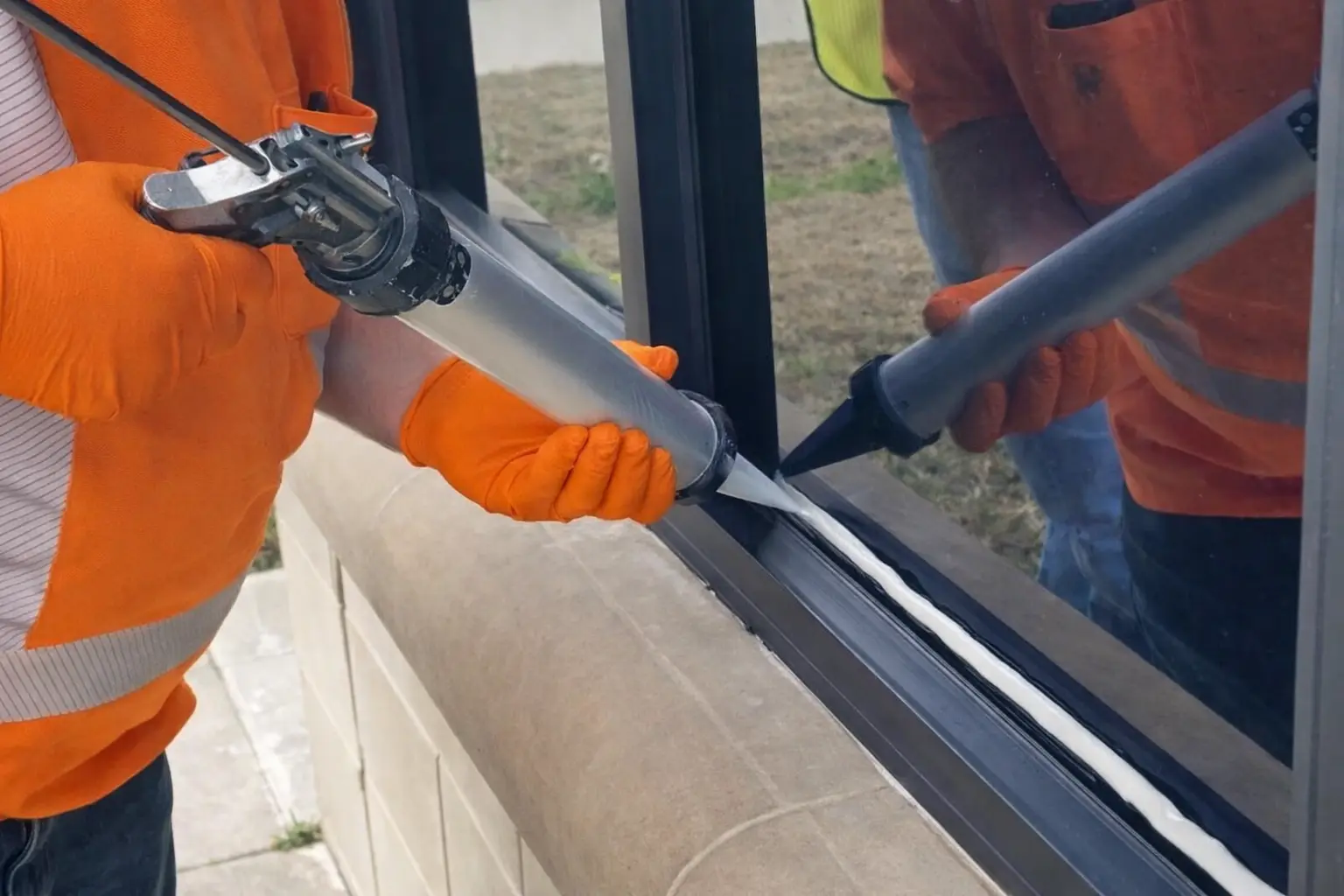
Exterior Window Caulking: What Actually Holds Up in Canadian Conditions
By Alex, Senior Installation Project Manager, AlphaTech Windows and Doors
Every spring I come across windows that spent the winter working against the homeowner. The glass is fine, the lock closes tight, but somewhere around the frame there’s a gap letting cold air in or water sneak behind the trim. Nine times out of ten, the exterior caulk has given out – cracked, pulled away from the frame, or just worn thin from years of freeze-thaw cycles.
It’s one of the most overlooked parts of window performance in Canadian homes.
Why the Perimeter Seal Matters
The window unit itself gets a lot of attention – the glass, the frame material, the hardware. But the joint between the window frame and the surrounding wall is where a lot of comfort problems actually start. In Canada, that joint goes through a beating every year. Temperature swings cause materials to expand and contract at different rates, wind-driven rain finds any opening it can, and once moisture gets behind the frame, it tends to stay there.
What I look for on older homes is the history of the bead. If a sealant has been applied two or three times over the years without removing the old material first, you usually end up with a thick, poorly bonded line that’s failing from underneath. The surface looks okay at a glance but doesn’t actually adhere to anything solid.
For newer installs, the exterior caulk is the finishing step – it closes the gap left between the window flange or trim and the siding. If that step is rushed or skipped, even a well-installed window can start showing air or moisture problems within a few seasons.
Choosing the Right Sealant
Not all exterior caulk is the same, and in Canada that distinction matters more than in milder climates.
- Exterior-grade silicone: Generally the most durable option – stays flexible through wide temperature swings, resists UV well, and holds adhesion in wet conditions. The trade-off is that most silicones can’t be painted over.
- Hybrid or polyurethane sealants: Strong performers that are usually paintable, making them a practical choice where aesthetics matter. They tend to be slightly less forgiving than silicone in severe freeze-thaw conditions.
- Standard acrylic caulk: Not a good fit for exterior window joints in most Canadian climates. It doesn’t stay flexible enough and tends to crack before the first winter is out.
The specs worth paying attention to are flexibility, UV resistance, and adhesion. A sealant applied correctly in September will handle winter much better than one applied in November when temperatures are already dropping.
What Installers Actually Check
When I’m assessing an exterior caulk situation, I’m looking at four places: the head (top of the window), the two jamb sides, and the sill. Each one has different exposure patterns:
- The Head: Takes direct rain and runoff.
- The Sill: Where water pools if drainage is poor.
- The Sides: Move the most from racking and thermal expansion.
Pro Tip: The sill on a casement or double-hung window needs to drain, not just seal. I’ve seen caulk applied solid across the sill in an attempt to stop water, when the actual fix was clearing blocked weep holes. Sealing the wrong spots traps moisture instead of blocking it.
A Realistic Field Example
Last fall I visited a home where the owner had been recaulking the same window every two years without getting ahead of the problem. The bead kept cracking by spring. When we stripped everything back, the original flashing tape under the brick mould had lifted at one corner and water had been running behind the frame.
No amount of surface caulking was going to fix that. We addressed the flashing issue, let things dry out, primed the substrate, and then sealed properly. The prep work is often more important than the product.
Timing and Cost Expectations
Shoulder seasons – late spring and early fall – are the most reliable time to reseal. You need dry surfaces, temperatures above about 5°C, and enough time before rain or freezing for the sealant to cure properly.
I’d caution against spending on premium sealant without addressing prep first. A high-end product applied over old failing caulk or a damp substrate won’t outperform a basic product applied correctly on a clean, dry joint.
Q&A
Q: My window closes fine but I still feel a draft. Could it be the caulk? Possibly. If the draft is around the frame rather than through the window itself, the exterior perimeter seal or the interior trim seal is often the culprit.
Q: How often does exterior window caulk need to be replaced? In most Canadian climates, a quality exterior sealant should last five to ten years. If you’re redoing it more often, the prep or product choice is usually the issue.
Q: Can I caulk in the fall before winter sets in? Yes, but aim for a stretch where temperatures stay above 5°C. Earlier in fall gives you more margin for a proper cure.
Q: Is caulking enough to stop water from getting in? Not always. If the flashing behind the trim is failing, caulking is just a Band-Aid. If leaks persist after sealing, it’s time to check the structural installation.