
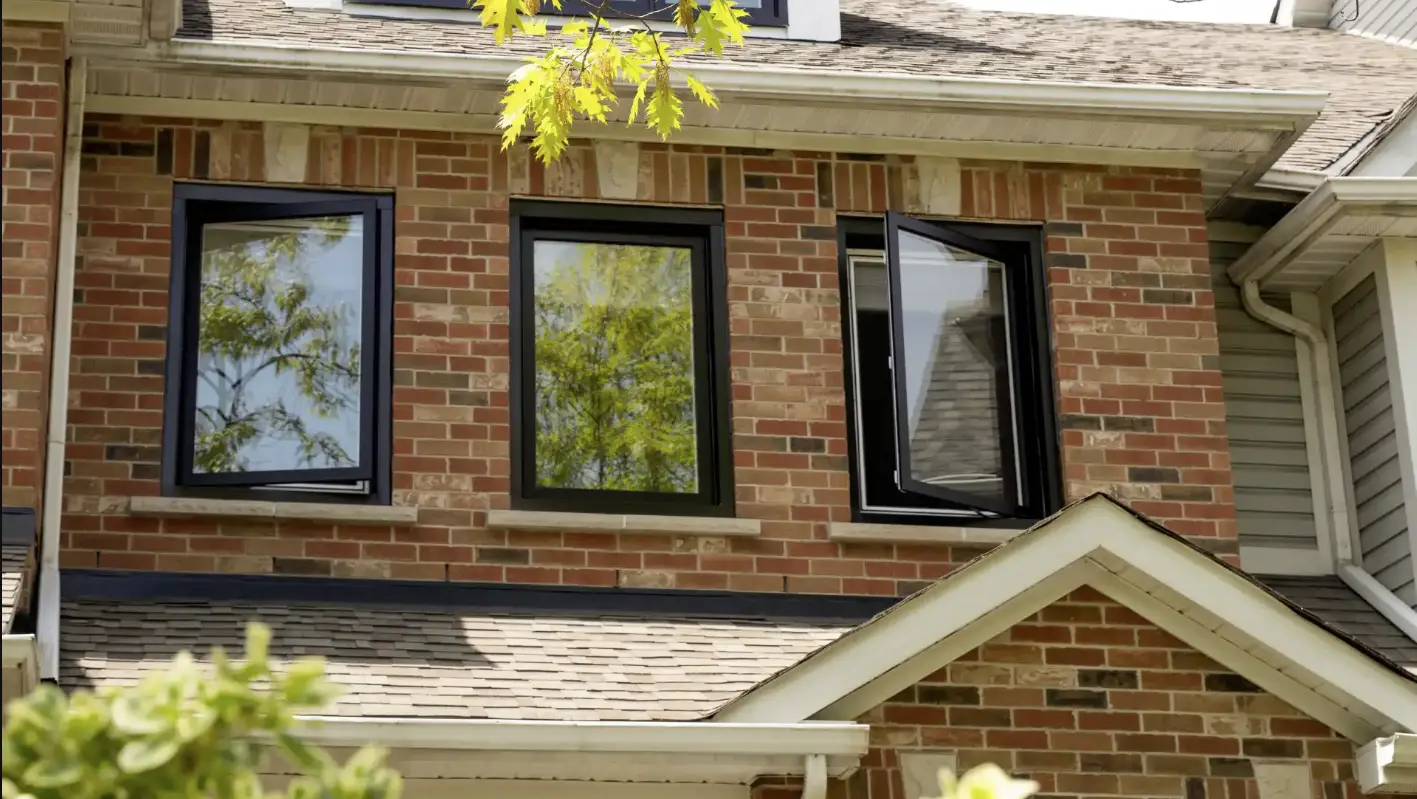
Exterior Window Replacement for Brick Homes
By Alex, Senior Installation Project Manager, AlphaTech Windows and Doors
I drive through a lot of Canadian neighborhoods and I often spot the same pattern. A beautiful brick-clad, two-storey home with original windows that are starting to look tired. The brickwork is still solid, but the frames are warped, the glass is fogged, and the caulking around the sills has cracked. That is usually why I get called in. What surprises most homeowners is how much difference a well-planned exterior window replacement makes – not just to comfort, but to how the whole front of the house reads from the street.
The core problem with older windows
Across the country, exterior windows live through long heating seasons, big temperature swings, and frequent freeze-thaw cycles. Old vinyl, wood, or aluminum frames can crack, bow, or pull away from the opening. This opens up air paths and lets in cold drafts and moisture. High winds and driving snow put extra stress on the flashing and caulking around brick veneer, so even a small gap can turn into a long-term leak if it is not addressed.
Summers matter too. Hot and sunny days mean that improperly controlled solar gain can make rooms uncomfortably hot, driving up your cooling costs. Modern low-emissivity coatings and the right balance of insulation are just as important for summer comfort as they are for winter heat retention.
Planning an exterior window upgrade for a brick home
Before picking a style, there are a few practical things worth thinking through so the upgrade actually solves the comfort issues instead of just looking nicer.
Know your specifications. Focus on U-factor for overall insulation and look closely at the air leakage ratings. These numbers tell you more than the marketing language on the label ever will.
Choose the right material. Vinyl, fiberglass, and aluminum-clad wood all have their place. Dark frames look sharp against red brick, but they do absorb more heat. Your frame material needs to handle that thermal stress well over time.
Match your layout to the room. Fixed windows deliver maximum energy performance, while operable casement windows let you actually vent the space. Most brick homes benefit from a thoughtful mix of both.
Protect your masonry. If your original frame is completely sound, an insert replacement can preserve the exterior brick. If the frame is rotting, a full-frame replacement is usually the safer choice to prevent hidden water damage behind the veneer.
If you are starting to weigh your options, NRCan’s key features and helpful tips for windows, doors and skylights is a practical starting point for decoding window labels and understanding what each rating actually means for your daily comfort.
If you are ready to look at specific styles, AlphaTech’s residential window replacement page can show you our approach to brick veneer homes.
What I look for as an installer
When I stand at the front of a brick home, my first stop is the brick sill and the caulking lines. Clean, tight joints and a well-installed sill pan tell me the house has been weather-tightened properly. If the caulking is peeling or the frame is sitting proud of the masonry, that is a sign the window is fighting the wall instead of sitting correctly inside it.
Many Canadian homes are built with brick veneer over wood framing. That changes how we measure, support, and flash replacement windows. The brick itself is not the structural support – the backup wood wall is. If you just measure to the brick opening and ignore the framing behind it, you can end up with a poorly anchored unit that looks fine on day one and leaks by year three.
A quick field story
Last fall I worked on a brick-clad home where the owners hated how dated the front looked, but they were genuinely worried about damaging the masonry. Their original aluminum-clad units were incredibly drafty, the sills had hairline cracks, and the upstairs bedrooms were always cold.
We went with double-glazed units with insulated frames and a mix of fixed and operating casement windows. The brick was left completely intact, but the rough openings were checked, supported properly, and fitted with new flashing. The owners ended up with clean, dark-framed windows sitting flush in the brick. They finally stopped using space heaters in the bedrooms, and the front of the house went from looking tired to intentionally modern.
Timing and budget expectations
Window replacement is usually a mid- to high-ticket renovation. Costs vary depending on frame material, glazing level, size, and how much interior trim needs to be touched. Many homeowners phase the project – front facade first for the biggest visual and comfort improvement, then the remaining sides as budget allows.
Work is often scheduled for milder seasons so caulking and insulation can cure properly, although experienced teams can work year-round with the right staging. One caution worth repeating: be careful about overspending on triple-pane glass for every window if your home’s overall insulation is still lacking. Sometimes a high-quality double-pane unit is the most cost-effective choice.
Closing thought
Upgrading exterior windows on a brick home can fundamentally change how the house feels inside and how it reads from the street. Take your time, focus on the installation details, and find a team that understands brick veneer. That way you are not just buying a new look – you are investing in a system that will handle Canadian weather for decades.
Common homeowner questions
Q: How much of the brick gets damaged during a replacement?
A: In most cases, very little or none at all. Insert-style replacements preserve the existing brick and trim. Full-frame jobs involve more interior work, but a careful installer will protect your exterior masonry and address any underlying flashing issues at the same time.
Q: Should I replace the whole house at once or just the front?
A: Many homeowners do the front first for the immediate curb appeal and comfort improvement. The performance benefit is cumulative, so phasing the work is a perfectly valid and budget-friendly approach.
Q: Can dark exterior frames cause warping?
A: Dark colours do absorb more heat. However, quality frames designed for Canadian climate handle this stress well. As long as the frame is robust and the installation allows for proper expansion, dark frames are a solid option.
Q: Will new windows fix all the drafts in my house?
A: They will fix the drafts coming through the window openings, which is a significant improvement. But if your attic or walls are poorly insulated, you might still feel cold spots. Windows are one part of your home’s overall energy system, not the whole answer.